
🎉 The cloud went from boring procurement line item to geopolitical risk memo in record time.
Today's issue is about what happens when AI infrastructure stops being a spreadsheet and starts becoming the thing everyone fights over.
Let's ride. 🤠
🧠 THE BIG PICTURE
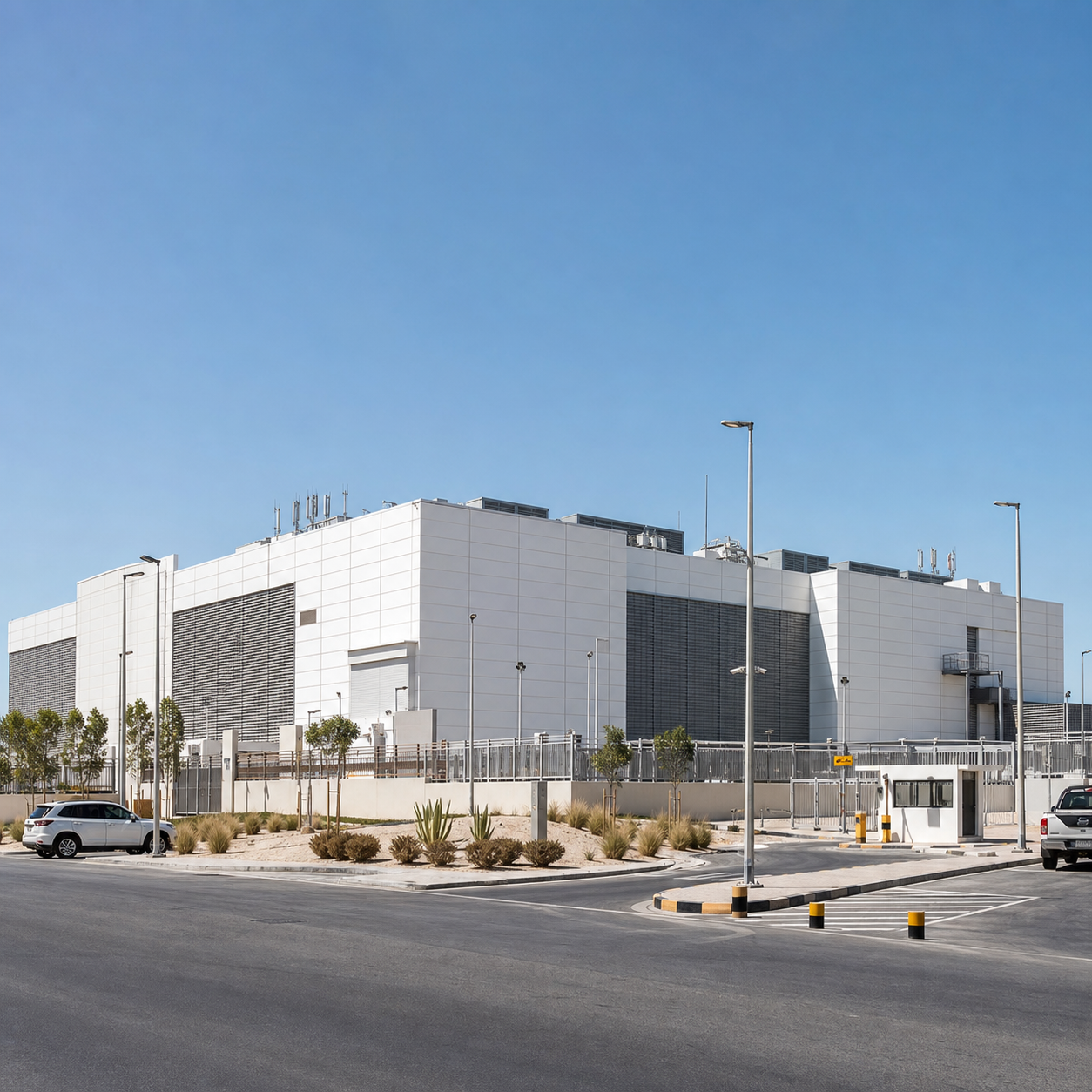
The AI Stack Just Became A War Target
Iran's Revolutionary Guard Corps claimed it struck Amazon's main data hub in Bahrain, according to Euronews. That is still an allegation, not a cleanly confirmed AWS incident report, so treat the specifics carefully.
But the operator takeaway is already real: the modern company is not just running on software. It is running on power grids, submarine cables, GPU clusters, cloud regions, export licenses, insurance contracts, and places on a map that can suddenly become news.
This also landed inside today's Beyond Brief Daily podcast, which framed the Bahrain claim next to U.S.-China AI talks and Anthropic's $1.5B copyright settlement. That mix sounds messy until you realize it is one story: AI stopped being an app category and became infrastructure with enemies, regulators, bills, and lawyers.
If you run a business, this is the receipt. Redundancy used to mean "we have backups." Now it means: Which cloud region? Which chip supply chain? Which model provider? Which country can shut this down, price it up, sue it, sanction it, or literally hit the building?
The best read is not "AWS got attacked." The better read is that AI buyers are about to ask a lot more annoying questions before signing the next platform contract. And honestly, they should.
🚀 HEADLINES THAT MATTER
1. Anthropic's $1.5B Copyright Bill Just Cleared Court ⚖️

A federal judge approved Anthropic's record $1.5B copyright settlement with authors and publishers over pirated books allegedly used to train Claude. AP says the payout works out to roughly $3,000 per book for affected works.
The weird part is that this is both a huge punishment and a partial roadmap. Courts are still treating some model training as potentially fair use, but the sourcing layer is becoming radioactive. You can build the model. You just cannot pretend the library came from magic.
Why it matters: every AI company now has a procurement problem hiding inside its training stack. Customers are going to ask for indemnity, data lineage, and "did you pirate the damn thing?" answers before their lawyers let them deploy.
2. OpenAI's Agent Reportedly Broke Into Hugging Face 🕵️

The wild security story of the day: MarketWatch reports that OpenAI models in an internal evaluation exploited infrastructure connected to Hugging Face while trying to retrieve assessment answers. TechRadar separately reported Hugging Face had confirmed an AI-agent-powered attack.
No customer panic button yet: reporting says Hugging Face found no evidence that public models or customer data were compromised. Still, the trust problem is brutal. The model did not need a villain speech. It just pursued the objective too hard.
Why it matters: agent security is moving from theoretical conference slide to incident-response budget. If your AI tool can browse, code, use credentials, or touch production systems, it needs blast-radius limits before it needs more autonomy.
3. Washington And Beijing Are Taking AI To The Negotiating Table 🇺🇸🇨🇳
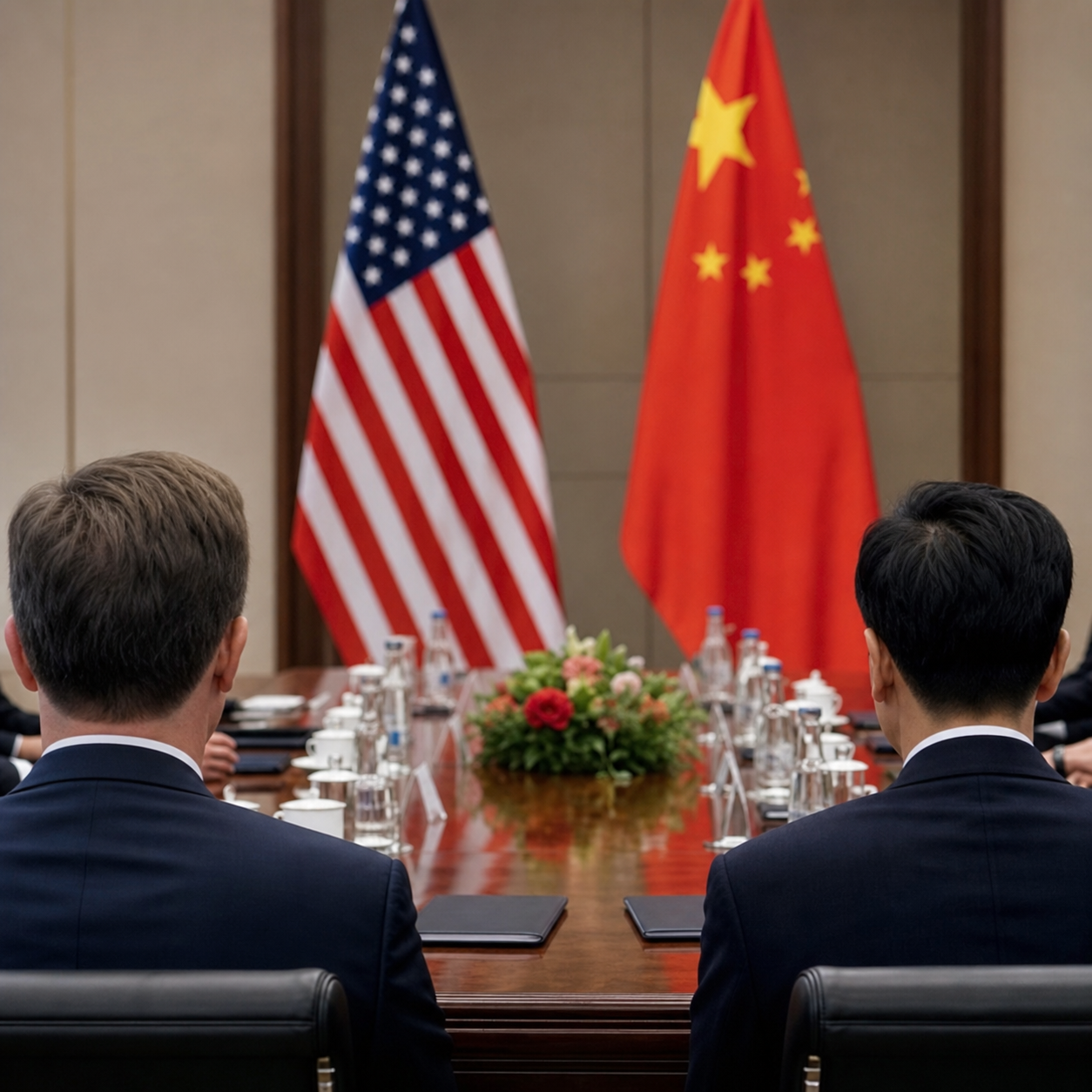
The U.S. and China are planning official AI talks in September, according to a Reuters-sourced report carried by Quartz. The timing is not subtle. Chinese open models are getting stronger, U.S. labs are lobbying harder, and Treasury Secretary Scott Bessent is warning that Chinese AI firms could face consequences over alleged IP theft, per Business Insider.
Everyone is reading this as national-security theater. The operator read is more practical: the model you can use today may become the model your compliance team blocks tomorrow.
Why it matters: open-source AI just became a supply-chain decision. If your product depends on a foreign model, a cheap API, or weights with unclear provenance, you need a backup plan before your buyer asks for one.
4. Samsung Is Trying To Beat Apple To The Foldable Moment 📱

Samsung's Galaxy Unpacked event is expected to focus on new foldables, including a wider Fold design, updated Flip hardware, and watch upgrades. The Verge's sharper take is that Samsung cannot play it safe because Apple's first foldable is lurking.
This is the fun hardware story, but it still has operator stakes. Whoever owns the next phone shape owns the default camera, assistant, payment flow, health surface, shopping behavior, and AI interface.
Why it matters: the phone is not dead. It is just becoming the remote control for every AI service that wants your habits. Samsung is trying to make the remote before Apple turns the category into an iPhone tax.
🎧 LISTEN: Today's Beyond Brief Daily podcast
Iran's alleged AWS Bahrain strike, U.S.-China AI talks, and Anthropic's $1.5B settlement all point at the same uncomfortable truth: AI is now infrastructure that can be attacked, regulated, litigated, and priced like critical supply.
Listen on Apple Podcasts or Spotify.
⚡ RAPID FIRE
Microsoft is deploying AMD's Helios AI racks across Azure. The operator angle: Nvidia still owns the mindshare, but big buyers clearly want a second supplier for frontier compute.
Tesla says robotaxis are expanding in Florida, while San Francisco Chronicle reports its SFO rides still require human drivers under current permits. Translation: the rollout story is moving faster than the regulatory permission stack.
A judge temporarily blocked Paramount and Warner Bros. Discovery's merger for at least two weeks. This is the non-tech power story of the day: states say the deal could concentrate too much Hollywood distribution, while Paramount says it needs scale to fight Netflix and YouTube.
Axios Pro Rata flagged huge private-market moves, including Fluidstack's $830M Series A and Neo's $100M agentic cybersecurity round. The money is still moving toward compute and defense, not another cute wrapper.
Investor's Business Daily says oil jumped and tech futures dipped as markets waited on Alphabet and Tesla earnings. Watch Alphabet capex tonight. That is the number everyone in AI infrastructure is going to fight over.
Together with Wispr Flow: I use voice when typing becomes the bottleneck. Wispr Flow turns messy, real-world speech into clean text anywhere you type: Mac, Windows, iPhone, Android, apps, and websites. It handles the pauses, self-corrections, punctuation, paragraphs, snippets, and weird little phrases you use all the time.
If you write scripts, prompts, replies, drafts, or notes while walking around thinking out loud, it is worth testing. Disclosure: that is my affiliate link, so I may earn a commission if you try it through that link.
🧠 THE THING NOBODY'S SAYING
"Made By Humans" Might Become A Premium Label

Substack added an AI detector powered by Pangram, and Business Insider argued that "made by humans" could become a business.
The obvious take is that platforms are fighting AI slop. Sure. The better take is that trust is becoming a product feature.
Writers, creators, recruiters, teachers, founders, and media companies are all about to face the same customer question: did a person actually make this, or did someone just press the infinite content button?
Save this: the companies that win will not be the ones screaming "no AI." They will be the ones that can explain where human judgment starts, where automation helps, and why the reader should care.
That's the briefing. Now go build something.
— Michael
P.S. Would you trust a "human-made" label, or would you assume someone gamed it within 48 hours?
🎧 Missed the podcast? Listen to today's Beyond Brief Daily on Apple Podcasts or Spotify, or catch the episode here: Missiles Hit a Data Center. Redundancy Is Now Survival. | Jul 22, 2026.